
TL;DR:
- Effective app growth in 2026 relies on data-driven audience understanding and clear KPI goals.
- Optimizing app store visuals with engaging screenshots and AI tools boosts discoverability and conversions.
- Multichannel marketing combined with automation enhances retention, engagement, and ROI.
The app stores are more crowded than ever. With millions of apps competing for the same screen real estate, getting noticed in 2026 requires more than a good product. It demands a sharp strategy built on real audience data, smart automation, and visuals that stop users mid-scroll. Whether you’re an indie developer pushing your first release or a marketing team scaling a mature product, the tactics that worked two years ago are losing ground fast. This article walks you through the most effective, evidence-based strategies to grow your app’s visibility, improve conversion rates, and keep users coming back.
Table of Contents
- Understand your audience and set clear goals
- Optimize your app store presence for 2026
- Harness AI-driven marketing and automation
- Maximize retention and drive conversions with multichannel strategies
- What most app marketers overlook in 2026
- Unlock greater app success with AppScreenKit
- Frequently asked questions
Key Takeaways
| Point | Details |
|---|---|
| Know your audience | Deep audience profiling helps align your app marketing for better results. |
| Prioritize ASO updates | Optimizing visuals, keywords, and compliance boosts app visibility in 2026. |
| Leverage AI and automation | Smart AI tools streamline campaigns, making them more personal and effective. |
| Adopt multichannel tactics | Engaging users across multiple channels increases retention and conversion rates. |
| Balance tech and human touch | Pairing automation with creativity and real user feedback gives your app a sustained edge. |
Understand your audience and set clear goals
Every high-performing app campaign starts with a clear picture of who you’re building for. Not a vague demographic, but a detailed user persona grounded in behavioral data, device preferences, pain points, and usage patterns. When you skip this step, you end up spending budget on the wrong channels and messaging that doesn’t convert.
To build a useful persona, pull data from multiple sources: app store reviews, in-app analytics, user interviews, and social listening tools. Look for patterns in how users describe their problems and what language they use. That vocabulary becomes your copywriting foundation. Successful app campaigns start with detailed audience analysis and well-defined KPIs, so treat this phase as non-negotiable.
Once you know your audience, define what success looks like with specific, measurable KPIs. The most valuable metrics for app marketers in 2026 include:
- Downloads and installs (volume and source attribution)
- Day 1, Day 7, and Day 30 retention rates (how many users stick around)
- Session length and frequency (engagement depth)
- Conversion rate from listing view to install
- Lifetime value (LTV) per user segment
- Cost per acquisition (CPA) by channel
Aligning these KPIs with your broader business objectives keeps campaigns focused. If your goal is revenue growth, LTV and CPA matter more than raw download numbers. If you’re building market share, retention and active user counts take priority.
Building a feedback loop is equally important. Set up regular review cycles, weekly for active campaigns, monthly for overall strategy, where you compare actual results against targets and adjust. Use marketing automation tools to streamline data collection and reporting so your team spends time on decisions, not spreadsheets. The AppScreenKit platform also integrates into this workflow by helping you test visual variations quickly, which feeds directly into your conversion data.
Pro Tip: Run a short user survey inside your app every quarter. Even five questions about why users chose your app and what they wish it did better can completely reshape your next campaign’s messaging.
Optimize your app store presence for 2026
With your audience and goals in place, ensuring your app stands out in the app stores is the next critical step. ASO (App Store Optimization) in 2026 has evolved significantly. Keywords still matter, but the algorithm now weighs engagement signals, visual quality, and compliance status more heavily than before.
Here’s a step-by-step approach to improving your listing:
- Audit your current keywords. Use tools like AppFollow or Sensor Tower to find gaps between your current rankings and high-volume terms your competitors own.
- Rewrite your title and subtitle. Place your primary keyword naturally in the title. Avoid keyword stuffing, which the algorithm now penalizes.
- Refresh your icon. A/B test at least two icon variants. Small changes in color contrast and shape recognition can shift click-through rates by double digits.
- Update your screenshots. App visuals and descriptions drive the majority of conversion decisions, so treat them as your most important creative asset.
- Add or update your preview video. A 15-30 second video showing core value in the first three seconds outperforms static screenshots in most categories.
- Check compliance. Age-related and content classification rules are shifting fast. Age-related compliance trends are especially active in 2026, and a compliance flag can suppress your listing without warning.
| ASO element | Impact level | Update frequency |
|---|---|---|
| Keywords | High | Monthly |
| Screenshots | Very high | Per major release |
| Preview video | High | Quarterly |
| Icon | Medium | Test twice yearly |
| Description | Medium | Per major release |
| Ratings and reviews | Very high | Ongoing |
Pro Tip: Use 3D device mockups in your screenshots instead of flat UI captures. They create depth and context that flat screenshots can’t match, and they signal a polished, professional product before users even read a word.

Harness AI-driven marketing and automation
Optimizing your listing sets you up for discovery, but cutting-edge growth now relies on the intelligent use of AI and automation. The shift here is significant. Teams that used to spend hours manually segmenting audiences and scheduling campaigns now run those same workflows in minutes.
AI-powered marketing strategies let you personalize campaigns at scale and automate repetitive tasks that used to eat your team’s bandwidth. In practice, this means:
- Dynamic user segmentation based on real-time behavior, not static cohorts
- Predictive push notifications sent at the exact moment a user is most likely to engage
- Automated A/B testing that runs experiments continuously and reallocates budget to winners
- AI-generated copy variations tested across segments without manual iteration
- Churn prediction models that trigger re-engagement flows before users actually leave
For onboarding, automation sequences that adapt to how a user behaves in their first session consistently outperform static welcome flows. If a user skips a feature, an automated nudge 24 hours later showing that feature’s value can recover engagement that would otherwise be lost.
“Intelligence automation can boost retention rates and ROI significantly when integrated into the full marketing stack.”
| Platform | Best for | Key AI feature |
|---|---|---|
| Braze | Retention and push | Predictive churn |
| CleverTap | Lifecycle automation | AI segmentation |
| Adjust | Attribution | Fraud detection AI |
| AppFollow | ASO monitoring | Review sentiment AI |
The key is integration. AI tools work best when they share data across your stack. Connect your analytics platform, your CRM, and your messaging tools so that insights from one feed decisions in another. Siloed tools produce siloed results.
Maximize retention and drive conversions with multichannel strategies
As AI automates your campaigns, diversifying channels will ensure your messages actually connect with users and spark action. A single-channel approach is a fragile strategy. Users move between email, social, in-app notifications, and SMS throughout their day, and your brand needs to show up consistently across all of them.
Here’s how to sequence a multichannel campaign effectively:
- Start with in-app messaging for users who are already active. This is your highest-intent audience.
- Layer push notifications for users who haven’t opened the app in 48 to 72 hours. Keep the message short and value-focused.
- Follow up with email for users who haven’t responded to push. Email allows richer content and deeper storytelling.
- Use social retargeting for lapsed users who haven’t engaged in 14 or more days. Paid retargeting on platforms like Meta or TikTok can re-introduce your app to users who’ve mentally moved on.
- Add SMS sparingly for high-value moments like subscription renewals or limited-time offers.
To avoid user fatigue, follow these guardrails:
- Cap total touchpoints at three to four per week across all channels combined
- Segment aggressively so users only receive messages relevant to their behavior
- Honor opt-outs instantly and use suppression lists across channels
- Test send times by segment, morning commuters respond differently than evening browsers
Multichannel engagement raises in-app conversion by over 35%, which makes this one of the highest-ROI investments you can make in your marketing stack. Pair it with using automation features to manage campaign sequencing without adding headcount. Use best marketing automation tools to track which channel combinations drive the most conversions for your specific audience.
Analytics and testing close the loop. Run holdout groups to measure the true lift from each channel, and retire any channel that isn’t contributing measurable value within 90 days.
What most app marketers overlook in 2026
Here’s an uncomfortable observation: the teams chasing the latest AI tool or automation platform are often the ones with the worst retention numbers. Not because the tools are bad, but because they’ve replaced thinking with automation. They’ve optimized the machine while forgetting the human on the other end.
The strongest wins we see come from teams that combine AI efficiency with genuine creative strategy. They use automation to handle the mechanics and then invest that saved time into storytelling, community building, and direct user conversations. Micro-communities, small Discord servers, Reddit threads, beta tester groups, consistently outperform broad social campaigns for trust and word-of-mouth growth.
Periodic manual testing matters too. Sit down and actually go through your own onboarding flow every quarter. Ask five real users to narrate their experience. You will find friction points that no dashboard will ever surface. The in-depth app marketing insights that move the needle often come from this kind of direct observation, not from another analytics report. Automation is a multiplier, but it multiplies whatever strategy you feed it. Feed it something human.
Unlock greater app success with AppScreenKit
If you’re ready to put these strategies into action, your app store visuals are the fastest lever you can pull right now. Strong screenshots and 3D mockups directly impact conversion rates, and most listings are still using flat, uninspiring captures that blend into the background.
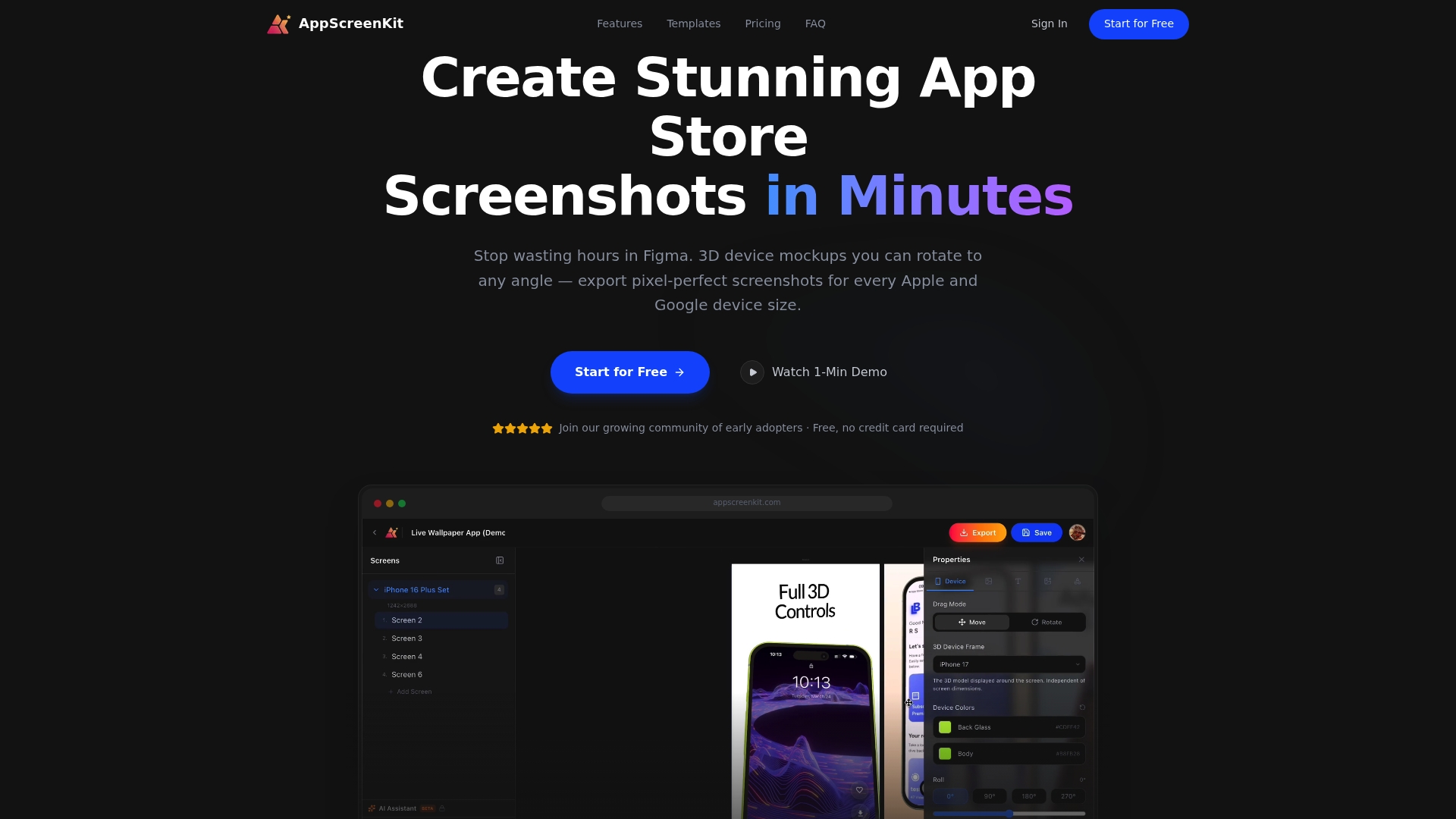
The App Store Screenshot Generator from AppScreenKit lets you create pixel-perfect, professional screenshots in minutes, no design background required. Upload your app images, choose from polished 3D device mockups, add branded text and gradient backgrounds, and export optimized files for every device size in one click. Whether you’re an indie developer or a growing team, explore AppScreenKit and see how fast your listing can look like it was built by a full design team.
Frequently asked questions
What is the most effective app marketing channel in 2026?
A combination of personalized push notifications and targeted social retargeting is delivering the strongest results. Multichannel engagement raises in-app conversion by over 35%, making a blended approach far more effective than any single channel alone.
How can AI improve my mobile app marketing?
AI-powered tools let you automate user segmentation, personalize campaigns at scale, and run predictive analytics that surface churn risk before users actually leave. The result is better ROI with less manual effort.
What should I include in my App Store screenshots in 2026?
Showcase your core features with real UI context, use 3D mockups for visual depth, and keep text overlays short and benefit-focused. App visuals and descriptions drive the majority of install decisions, so treat every screenshot as a conversion asset.
How do I avoid user fatigue from too many messages?
Cap total weekly touchpoints across all channels, segment users so messages stay relevant, and test send timing by behavior pattern. Respecting user attention is what keeps engagement high and unsubscribe rates low.
Leave a Reply